
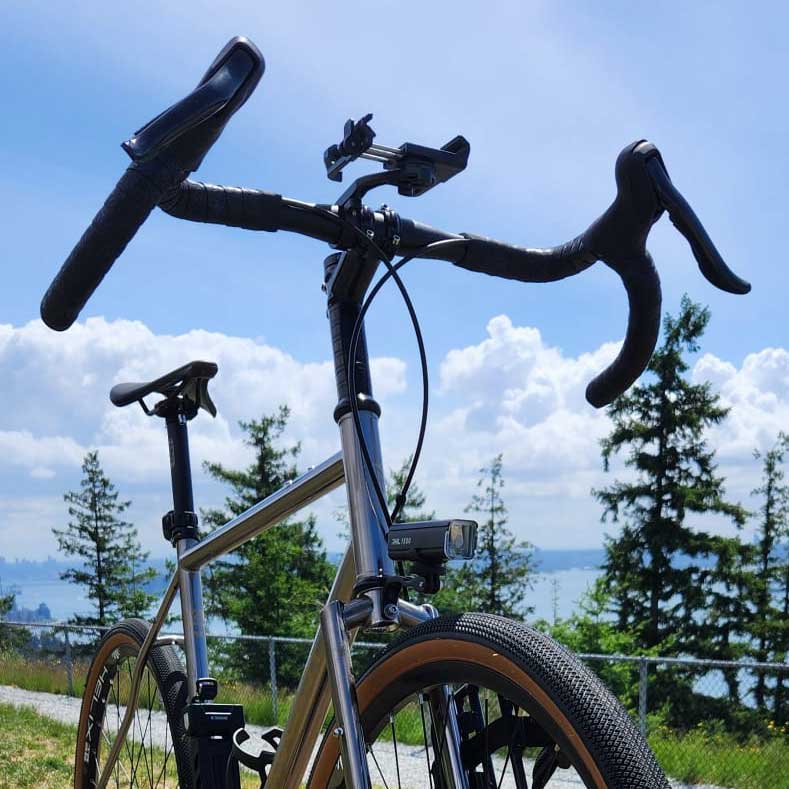
We sell both of these groupsets. We build the Evercoast Passage Pro with Shimano GRX. We build the Passage EDS with Wheeltop GeX. We have assembled, adjusted, and ridden both, and we have had the same conversation with enough customers that it is worth writing down properly.
This is not a review written by someone who tested one groupset for six weeks and then handed it back. This is a comparison written by a shop that has both on the bench, both on bikes, and a clear opinion about who should buy which one.
What These Two Groupsets Actually Are
Shimano GRX is Shimano's dedicated gravel groupset: a line that has existed since 2019 and represents the full weight of the world's largest drivetrain manufacturer applied specifically to gravel riding. GRX components are designed specifically for the needs of gravel, adventure, and all-road riding, with gearing and features that differ from Shimano's road ranges. It comes in multiple tiers: RX600 entry mechanical, RX820 mid-range mechanical, and Di2 electronic at the top, with hydraulic disc brakes throughout. It is the benchmark against which every other gravel groupset is measured.
Wheeltop EDS GeX is something different. Wheeltop traces its origins back to the early 1950s in China and has historically operated as an OEM drivetrain and component manufacturer, making parts for other brands. In recent years the brand has repositioned itself from background supplier to consumer-facing drivetrain challenger. The GeX is not a stripped-down copy of SRAM AXS. It is a reimagining, complete with programmable gear mapping, cross-brand cassette compatibility, and hydraulic disc brakes included. It is fully wireless, includes brakes in the box, and runs from 3 to 14 speeds depending on what cassette you pair it with. It is the most interesting new drivetrain system to arrive in gravel cycling in years, and almost no Canadian bike shop stocks it.
BikeRadar noted at Eurobike 2025 that Wheeltop even styles the GeX name deliberately close to GRX, which tells you exactly who Wheeltop is aiming at.
The Case for Shimano GRX
GRX exists because Shimano paid attention to what gravel riders actually needed and built components specifically for it. The lever ergonomics are designed for riding in the drops for extended periods on rough terrain. The clutch rear derailleur keeps the chain on through the kind of chatter that would dump it on a standard road derailleur. The brakes are among the best hydraulic disc brakes available at any price point: consistent, well-modulated, and straightforward to bleed. The hood shape is one of the most comfortable in the industry for long days in variable hand positions.
GRX mechanical offers dependable performance and useful compatibility with Shimano's road drivetrains: which means if you already have a Shimano road bike, there is a good chance your cassette, chain, and bottom bracket carry straight across. The ecosystem is mature, the parts are stocked everywhere, and any mechanic in the world can service it.
Shimano GRX mechanical is also the most cost-effective way into a gravel-specific groupset with hydraulic disc brakes. On the Passage Pro GRX build, it delivers a complete, proven, immediately familiar drivetrain at a price that makes sense for the bike. There is no learning curve, no app pairing, no battery to manage. You ride, you shift, it works.
For riders who want electronic shifting, Shimano finally released the 1x12 GRX Di2 version in mid-2025: fully wireless operation, fast shifting, and Shimano-typical levels of smoothness. It is excellent. It is also significantly more expensive than the Wheeltop, and that gap is where the conversation gets interesting.
GRX is the right choice if: You want a proven, globally supported groupset with no surprises. You value the established Shimano ecosystem: compatible with parts you already own, serviceable anywhere, with a track record measured in decades. You are not interested in managing an app or a battery charge schedule. You want the best possible brake modulation in a gravel-specific package. You are building a bike to race, tour, or use in conditions where you cannot afford a learning curve.
The Case for Wheeltop EDS GeX
The GeX does something that neither GRX nor SRAM AXS will do: it lets you choose your cassette, your chain, and your speed configuration, and then reconfigures itself to match. The system is not locked into a 12-speed ecosystem. You choose your gear range - from 3 to 14 speeds - and pair it with any cassette you like, assuming spacing matches and the maximum cog does not exceed cage tolerance.
This matters more than it sounds. It means you can run a Shimano HG cassette you already own. It means if the industry moves to a new standard, you change the cassette rather than the groupset. It means the system adapts to the bike rather than requiring the bike to adapt to the system. In a market where SRAM increasingly locks you into XD or XDR and Shimano's new 12-speed cassettes are not backward-compatible, the GeX's open platform is a genuine differentiator.
The system is fully wireless. The battery delivers up to 20,000 shifts per charge. In real-world use that is months between charges for most riders. Bluetooth and ANT+ connectivity mean setup through the Wheeltop app is straightforward, and the app allows you to remap gear sequences, adjust shift sensitivity, and monitor battery level. Multi-shift hold the lever and the derailleur sweeps multiple gears in one action is genuinely useful on steep climbs where you need to drop several gears fast.
The brakes are included. This is significant. Compared to SRAM Rival AXS or GRX Di2, the materials are slightly lower grade but no sharp compromises. The RA7800 calipers use CNC-machined bodies with dual ceramic pistons and mineral oil fluid. They are not GRX brakes. They are meaningfully better than mechanical disc brakes and adequate for the vast majority of gravel riding. We have bled them, adjusted them, and ridden them. They work.
The GeX is IP67 waterproof. The derailleur, the shifters, the junction: all rated for submersion. For year-round Vancouver riding, that matters.
And then there is the price. A complete Wheeltop GeX groupset: derailleur, shifters, brakes, charging cable lands at a fraction of what Shimano GRX Di2 costs. If wireless electronic shifting is on your list and the GRX Di2 price is a barrier, the GeX changes the calculation entirely.
GeX is the right choice if: You want wireless electronic shifting at a price that makes sense on a mid-range build. You value an open platform that works with cassettes and chains you already own or can source anywhere. You want the flexibility to change speed configuration without changing the whole groupset. You are an technically curious rider who enjoys the app-based setup process rather than finding it a chore. You are building a bikepacking or adventure rig where the ability to adapt gearing to the terrain matters.
Where They Are Not Comparable
There are two areas where the comparison stops being useful.
Mechanical vs electronic: GRX is available in mechanical. GeX is electronic only. If you want mechanical shifting: no battery, no Bluetooth, cables you can adjust with a barrel adjuster on the road: GRX mechanical is your answer. There is no mechanical Wheeltop equivalent.
Support and serviceability: Shimano GRX is supported by every bike shop in the world. Cables, housing, brake pads, derailleur hangers, bleed kits: all of it is available from any supplier. Wheeltop is a newer brand with a smaller global footprint. We stock Wheeltop parts and can service GeX groupsets at our workshop. Outside of specialist shops, you may find parts harder to source. For a touring rider or someone who travels extensively with their bike, this is a real consideration.
What We Actually Recommend
If you are building a Passage Pro and you know you want hydraulic brakes, reliable shifting, and zero management overhead, build it with GRX. It is the groupset we have the most confidence in for the widest range of riders and the widest range of conditions.
If you want electronic shifting and the GRX Di2 price puts it out of reach for the build you have in mind, the GeX is a serious option: not a compromise, but a genuine alternative with specific advantages that GRX does not have. The open platform, the speed configurability, and the wireless system for the price are all genuinely compelling for the right rider.
If you want to understand which one makes sense for how you ride specifically, come into the workshop. We have both on bikes. We can put you on both. The conversation takes twenty minutes and you will leave knowing exactly what to order.
The Evercoast Passage Pro GRX and Passage EDS are both available at 1737 Fir Street, Vancouver. Both are assembled, certified, and ride-tested before handoff.
John Tarin Perry is the founder of Evercoast Bicycles, a BCIT-trained Mechanical Engineering Technologist, and a former owner of multiple Shimano Di2-equipped road bikes.
Share:
The Passage: A Gravel Bike Built for How Vancouver Riders Actually Ride
Your eBike Brakes: What You Actually Have, and When It Matters