
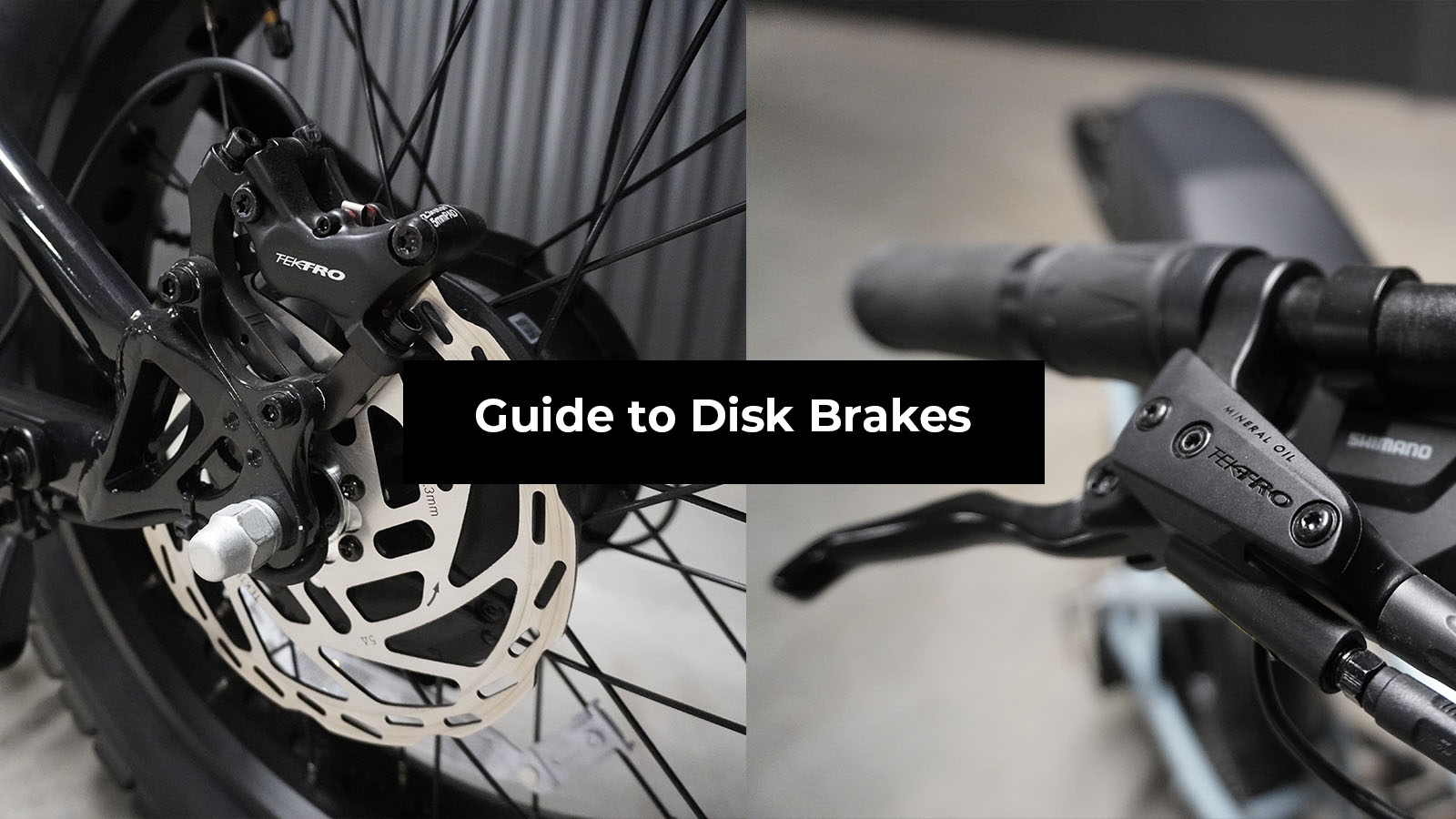
The Brake Landscape Has Changed
If you bought a Rad Power Bikes RadRover or RadCity in the last two or three years, you have hydraulic disc brakes with 180mm rotors. Same story if you are on a current Aventon, ENVO, VoltBike, or most mainstream Canadian and North American eBike brands. The industry has largely moved to hydraulic brakes at the mainstream price point, and that is a genuine improvement that deserves acknowledgment.
The story is different for three groups of riders, and that is who this post is actually for.
Older eBikes. The RadRover 5, which is still one of the most common eBikes we see in Vancouver, shipped with Tektro Aries mechanical disc brakes. So did many earlier generation models from brands that have since upgraded their spec. If your bike is more than three or four years old, it is worth knowing what generation of brakes it has and what condition they are in.
Entry-level and generic models. The VoltBike Elegant, the entry tier of Ride1Up's lineup, and the enormous category of white-label and generic eBikes sold through Costco, Amazon, and direct import channels frequently ship with mechanical disc brakes at 160mm rotors. As one reviewer noted, many eBikes in the budget category still come with mechanical brakes and 160mm rotors and a budget eBike is still a 25 kg machine that needs to stop reliably.
Bikes with hydraulic brakes that haven't been maintained. This is the category most riders overlook entirely, and it is where we see the most real-world problems. A NUTT hydraulic caliper - which is what ships on current Rad Power Bikes - is adequate when properly maintained. After two or three Vancouver winters without a bleed, with worn pads and contaminated fluid, it is a different brake entirely. The lever feel degrades gradually enough that most riders do not notice how far the system has drifted from its original performance.
Why eBike Brakes Need More Attention Than Standard Bike Brakes
Regardless of what brakes you have, eBike brakes work harder than bicycle brakes. This is not a subjective claim: it is a function of mass.
A standard bicycle with a rider weighs approximately 80–90 kg total. A hub motor eBike with a rider weighs 105–130 kg. That additional 25–40 kg of mass requires more braking force to achieve the same stopping distance at the same speed. The brakes are doing more work, generating more heat, and wearing pads and rotors faster than the equivalent system on a standard bicycle.
This means a few things in practice:
Brake pads wear faster. A pad interval that would last two seasons on a road bike may last one season on a heavy eBike used for daily commuting. Most riders replace pads by feel: when the lever gets closer to the bar, when stopping distances increase, when they hear metal-on-metal contact. By the time any of those signals are obvious, the system has already been operating below its intended specification for some time.
Rotors wear faster. The same physics that wear pads faster also wear rotors faster. The minimum thickness specification on most hydraulic disc rotors is 1.5–1.8mm. A rotor that started at 2.0mm and has worn to 1.6mm is structurally compromised and should be replaced. Most riders never measure this.
Hydraulic systems need bleeding. Mineral oil and DOT fluid both absorb moisture over time, which lowers their boiling point and degrades braking performance, particularly on sustained descents where the system heats up. An annual bleed is not optional maintenance on an eBike used for year-round commuting in wet conditions. It is the baseline.
The Lectric Recall
In 2023, Lectric eBikes recalled approximately 45,000 bikes across their XP 3.0 and XP Step-Thru models due to mechanical brake caliper failures that caused loss of braking control and contributed to rider injuries. The Consumer Product Safety Commission issued the recall.
Lectric is not a fringe brand. They are one of the highest-volume direct-to-consumer eBike companies in North America. The failure mode was the stock mechanical brake caliper. This is not a story about a manufacturing defect in isolation. It is a story about what happens when a 25 kg eBike is specified with mechanical brakes and those brakes are not maintained to the standard the bike's mass demands.
What Good eBike Brakes Look Like
For context, here is what the better-specified end of the market looks like. Current Rad Power Bikes RadRover and RadCity models ship with NUTT hydraulic disc brakes and 180mm rotors. Aventon's Level 4 ships with Tektro HD-M3120 hydraulic brakes with 180mm rotors front and rear, achieving an average stopping distance of 20 feet from speed in testing: meaningfully better than the category average. ENVO, VoltBike, and most established Canadian brands have similarly moved to hydraulic systems at 180mm across their mainstream lineup.
These are adequate brakes when they are properly maintained. They are not exceptional brakes: none of these brands are shipping Shimano XT or TRP Spyre calipers on a $2,000 eBike. But hydraulic at 180mm, properly bled and with pads that have not worn through, is a reasonable specification for an urban commuter eBike.
The problem, in our experience, is not what most eBikes ship with. It is what they end up with after two or three years of Vancouver riding without a service visit.
Who Needs a Brake Upgrade
Mechanical brakes on any eBike. If your eBike shipped with mechanical disc brakes: Tektro Aries, Promax, Zoom, or any unbranded mechanical caliper, upgrading to hydraulic is a safety improvement, not a performance modification. The mass of the bike and the stop-and-go demands of urban commuting are beyond what a well-maintained mechanical caliper can reliably deliver over its service life. This applies to older Rad models, entry-level VoltBike and Ride1Up models, and the full category of budget and generic eBikes.
Degraded hydraulic systems. If you have hydraulic brakes but they have not been bled in more than 12 months, or if the lever feel has changed since the bike was new, or if you are not sure when the pads were last replaced: bring the bike in. We will assess the system and tell you what it actually needs. Sometimes the answer is a bleed and new pads. Sometimes the answer is a caliper upgrade.
Low-grade stock rotors regardless of caliper type. The steel rotors that ship on most production eBikes are not the same material as a Shimano RT66 or RT86. They wear faster and dissipate heat less effectively. If you are replacing brakes for any reason, replacing the rotors at the same time is the correct approach: you are already paying the labour once.
What We Offer
Hydraulic brake upgrade — Tektro HD-E350: Purpose-built for eBike use with motor cutoff integration. Our standard upgrade for eBikes shipping with mechanical calipers. Includes bleed, rotor inspection, and full bed-in procedure. Optional Shimano 180mm rotor upgrade when performed at the same time.
Mechanical brake upgrade — TRP Spyre with Jagwire KEB-SL: Dual-sided pad actuation and compressionless housing for the best possible mechanical brake feel. For riders who want to stay mechanical or whose budget does not support a full hydraulic conversion at this time.
Compressionless housing — Jagwire KEB-SL: The most cost-effective brake improvement for any eBike with mechanical brakes. Both runs replaced, all cables lubricated. Firm, direct lever feel immediately.
Hydraulic service — bleed and pad replacement: For eBikes with hydraulic brakes that need attention rather than replacement. Annual service recommended for year-round Vancouver riding.
Who This Is Not For
If you ride a current Trek, Specialized, Cannondale, Giant, or Norco eBike, your brake specification is almost certainly appropriate for the bike. These brands engineer their complete bikes with component specifications that are matched to the bike's weight and intended use. The upgrade program described above is designed for the direct-to-consumer and budget eBike category not typically for bikes from major bicycle brands that have been doing this for decades.
That said, if you want to be sure your brakes are suitable and in good working order, we always suggest bringing the bike in for us to inspect. Whether your bike is $1,000.00 or $10,000.00, brake pads wear out.
Compatibility and Consultation
We work on Rad Power Bikes, Aventon, Lectric, Ride1Up, ENVO, VoltBike, Momentum, and most hub motor eBike brands. Compatibility for brake upgrades varies by model and generation: brake mount standards, rotor sizes, and cable routing differ enough that we never assume. Bring your bike in and we will assess it at no charge before recommending anything.
One note on electrical, motor, and battery issues: we do not diagnose or repair electrical faults on eBikes. Those are manufacturer warranty matters. We will document any mechanical findings and help you build the case for a warranty claim. But the electrical diagnosis belongs with the manufacturer.
Evercoast Bicycles is located at 1737 Fir Street, Vancouver — on the Arbutus Greenway. We provide full mechanical service and brake upgrades for Rad Power Bikes and most hub motor eBike brands. John Tarin Perry is the founder of Evercoast Bicycles and a BCIT-trained Mechanical Engineering Technologist. Alex Ramon, Evercoast's senior technician, is a former Service Manager at Rad Power Bikes.
Share:
Shimano GRX vs Wheeltop EDS GeX: An Honest Comparison for Gravel Riders