
Having worked in bike shops since I was 14, I was fascinated by carbon bikes. They were incredibly lightweight, and had such distinctive tube designs, they just looked so fast. Throughout my life, I've owned many, many, many bikes. I always believed that I would be a better sales adviser and mechanic if I knew firsthand the products I was selling. To soend my hard earned money, and live with them. Throughout my time, I've owned and lived with several carbon bikes, from Cannondale SuperSix Evo Hi-Mods, to Trek Domane and Emondas, I know first hand what Carbon bikes to well, and where they often fall short.
I am not writing this as someone who has never ridden the alternative. I am writing it as someone who has ridden the alternative extensively, serviced hundreds of them, and made a deliberate choice on what I wanted my bikes to stand for.
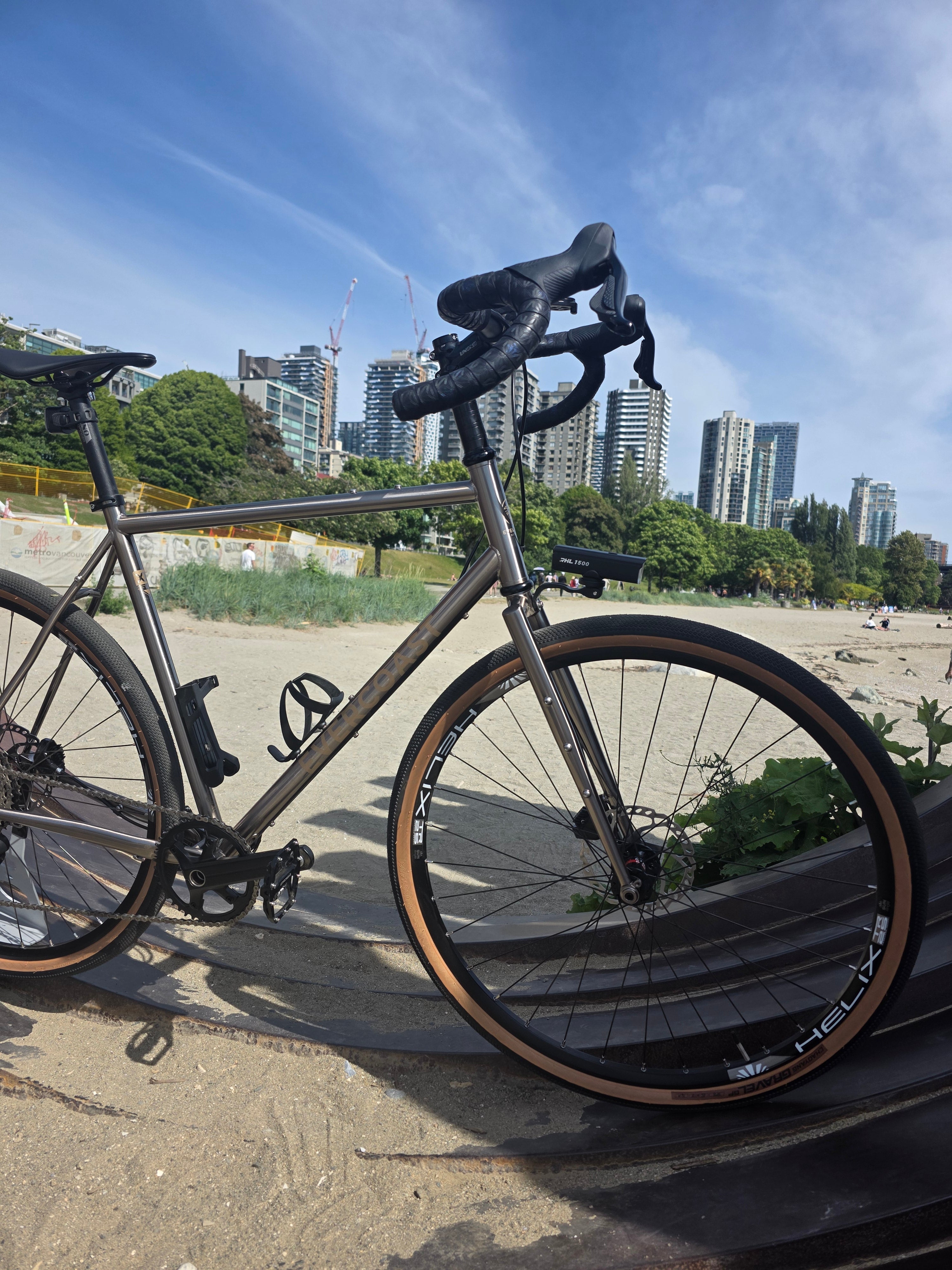
Evercoast builds in 4130 chromoly steel. That choice is not nostalgia, not aesthetics, and not a budget compromise. It is an engineering decision made by a BCIT Mechanical Engineering Technologist who has personally assembled, certified, and ridden every frame we sell. This is the reasoning behind it.
What 4130 Chromoly Actually Is
4130 is a chromium-molybdenum alloy steel. The numbers refer to the alloy composition: approximately 0.30% carbon, 0.8–1.1% chromium, 0.15–0.25% molybdenum. It is the same material used in aircraft fuselage tubing, motorsport chassis, and precision tooling. It has been used in bicycle frames since the 1930s and it has never stopped being used because it has never been superseded on the properties that matter most for a daily-use bicycle.
Chromoly is not just steel. Plain high-tensile steel, the stuff in a department store bike, is a different material entirely. 4130 is significantly stronger, more fatigue-resistant, and more consistent in its mechanical properties. When we say chromoly, we mean specifically 4130, and when we say triple-butted, we mean the tube walls are machined at three different thicknesses: thicker at the ends where the TIG weld joints concentrate stress, thinner through the mid-section where the tube just needs to flex and carry load. The result is a frame that is lighter than it looks, stiff where it needs to be, and deliberately compliant where you feel it.
Both the Passage and Passage Pro frames are also heat-treated after welding. This is worth understanding. Welding steel introduces residual stress into the heat-affected zone around each joint: the metal expands and contracts unevenly as it heats and cools, leaving internal tension that affects how the frame responds to load over time. Post-weld heat treatment done properly, in a controlled environment relieves that stress and produces a more consistent, longer-lasting frame. Not every production steel frame does this. Ours do.
The Compliance Argument
Here is the thing about carbon that the marketing does not tell you clearly: it is designed to be stiff in specific directions and compliant in others, and the way those properties are tuned is entirely dependent on the layup schedule the engineering team chose during development. On a $5,000 road bike from a major brand, that layup was refined over years of prototyping and rider feedback. On a $1,200 carbon bike, the layup is whatever kept the price down.
Steel does not work that way. The compliance properties of 4130 chromoly are inherent to the material. They are not manufactured in and they cannot be manufactured out. A well-built chromoly frame deflects under load and returns energy. Not in a noodly, vague way, but in a progressive, linear way that experienced riders describe as the frame working with them rather than against them. Over two hours on the Arbutus Greenway or a long gravel day on the North Shore, that difference is felt in your hands, your lower back, and your energy levels at the end of the ride.
I have ridden enough carbon bikes to know that many of them deliver this well. I have also ridden enough to know that the ones that do cost significantly more than the ones that do not. Chromoly delivers it consistently, at every price point we build at, because the material physics do not change based on what we paid for the tubes.
The Serviceability Argument
This is the argument I make most often in the workshop, and it is the one that lands most directly with Vancouver riders.
The most common conversation I had during ten+ years in this industry went like this: a customer comes in with a bike from a major brand, something has gone wrong, and the part they need is either proprietary, discontinued, or requires a tool that costs more than the repair. Creaking press-fit bottom brackets. Proprietary cable routing that requires a specialized bleed kits and completely disassembling the cockpit. Carbon dropouts that cannot be repaired, only replaced. Integrated cockpits that turn a stem swap into a full bike-fit exercise.
The Evercoast Serviceability Standard is a direct response to that conversation:
- BSA English-threaded bottom bracket: the standard that has worked for fifty years, that any shop in the world carries in stock, that a competent mechanic can service with tools they already have. Bolstered by the fact that we exclusively spec the Shimano BB RS501 on all builds, from entry level to premium, because they are simply the best value for money.
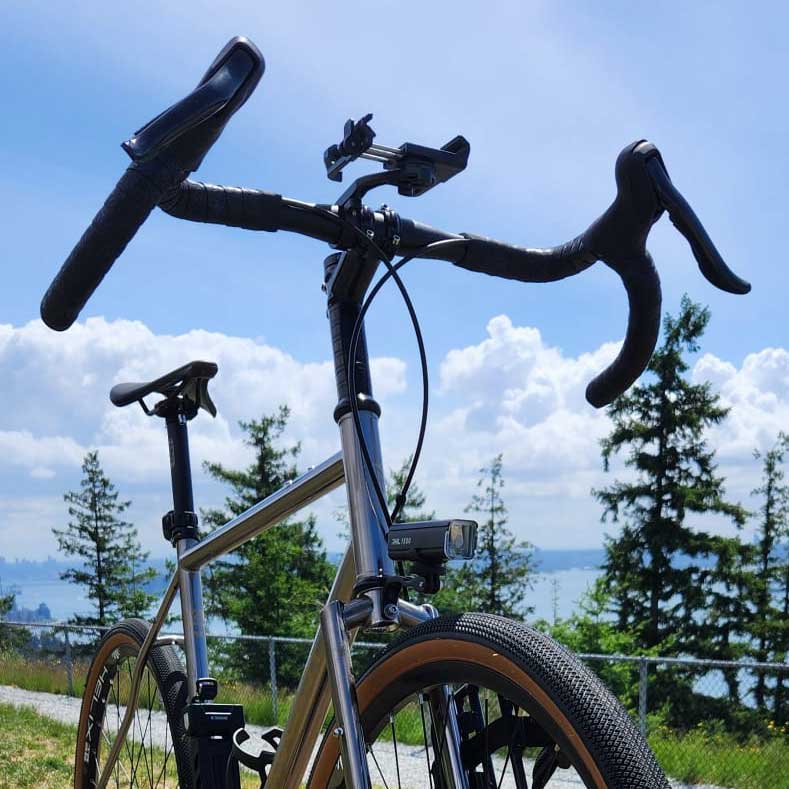
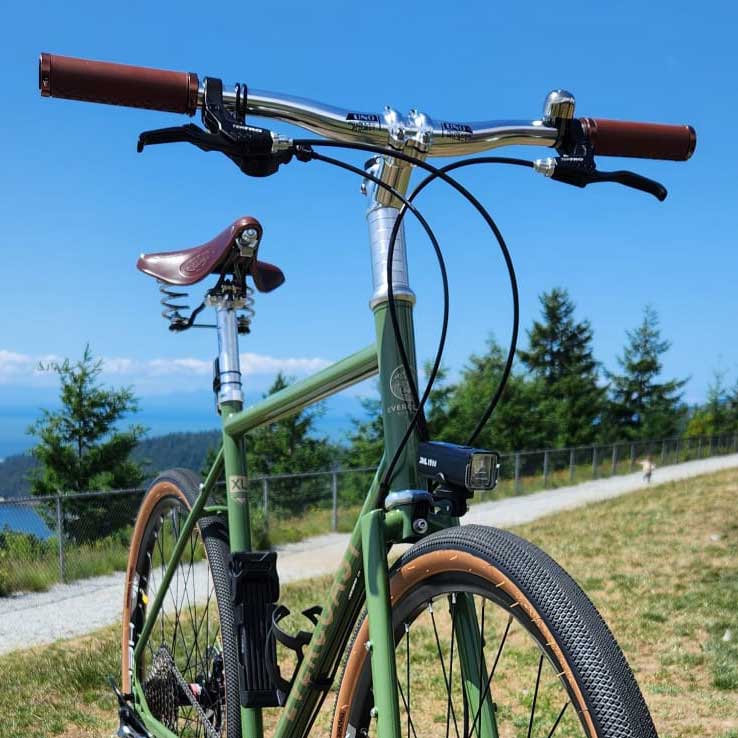
- A 27.2mm round seatpost: not proprietary, not integrated, a standard diameter available everywhere. Non integrated handlebar and stem combinations in standard 31.8mm handlebar clamps, meaning you can tailor the fit easily. Bonus, we offer our entire cockpits in either black or polished silver, the choice is yours.
- External cup headsets which are greased and hand-pressed into machined straight headtubes
- IS/Post mount or flat mount disc brakes depending on the build. IS/Post Mount is great for our touring and flat bar customers wanting a world wide universal standard for mechanical and hydraulic disc brakes. Flat mount for those wanting the current gravel and road groupsets.
- 32-hole eyeleted rims laced to sealed bearing hubs. Standard J-bend spokes mean you have the highest chance of finding a replacement anywhere in the world. The eyelets on the rim add an extra layer of strength, and sealed bearings keep the elements out, while simplifying replacement when they do wear out.
- Full cable housing for our mechanical brake and cable builds ensures that the cabes are shielded from the elements, and last much longer. It is more expensive for us, but we know the effect it has for our riders.
None of these choices are accidental. Every one of them is a decision to prioritize the rider's long-term ownership experience over the short-term appearance of premium specification. A bike built this way can be serviced by any competent mechanic, anywhere, for as long as the rider wants to ride it.
The Longevity Argument
Carbon fatigues. This is not a criticism, it is a material property. Carbon fiber composite accumulates damage from impact loads in ways that are not always visible, and the structural integrity of a carbon frame after a significant impact is genuinely difficult to assess without specialist equipment. I have seen carbon frames with invisible damage that should not have been ridden. I have seen riders continue to ride them because the damage was not visible.
Steel is different. Steel bends before it breaks, and a bent steel frame is a frame that tells you something has happened. The failure mode is visible and gradual rather than sudden and catastrophic. For a daily commuter, a loaded tourer, or a gravel rider who puts their bike through real conditions rather than controlled ones, that difference matters.
Steel also does not degrade in UV. It does not absorb moisture through micro-cracks over time. A well-maintained chromoly frame kept clean, kept painted, protected from rust at the joints will outlast its components by decades. I have no intention of building bikes that end up in landfill in five years.
Why Not Aluminum?
Aluminum is lighter than steel at equivalent stiffness. That is a real advantage, and I am not dismissing it. For a dedicated performance road build where weight matters and compliance is managed through fork choice and seatpost flex, aluminum at the right price point makes sense.
For a gravel and all-road bike in Vancouver, where the roads are wet eight months of the year, where a significant percentage of riders are also commuting, carrying loads, or adding racks and fenders, the trade-off is less obvious. Aluminum is stiffer for its weight, which means it transmits more road vibration. Over a long ride on mixed terrain, that is felt. Aluminum also fatigues differently than steel: it has a finite fatigue life even below its yield strength, meaning repeated flex cycles accumulate damage over time regardless of whether the frame is ever overloaded. This is why aluminum frames carry shorter warranties than steel frames with comparable build quality.
The Passage is not heavier than a comparable aluminum build by as much as most people assume. Triple-butted 4130 with proper tube selection comes in within 300–500 grams of an equivalent aluminum frameset. On a complete build where the wheels, components, and accessories add up to 10+ kg, that difference is not what most riders will notice on the road. What they will notice is how the frame feels under them hour after hour.
The Honest Case
I am not telling you carbon or aluminum is bad. I own a carbon bike today. I will probably own more.
I am telling you that for the way most Vancouver riders actually ride: mixed surfaces, variable weather, year-round use, racks and fenders and locks and bags, a well-built chromoly steel frame is the most honest choice at the price points Evercoast builds at. It is the material that delivers compliance without compromise, serviceability without asterisks, and longevity without a maintenance schedule that requires a specialist.
Every Passage and Passage Pro is built to those principles, assembled at our workshop at 1737 Fir Street, and ridden before it leaves our hands. If you want to understand what the material feels like before you commit, come visit us in store. Throw a leg over one of our bikes, take for a test ride: it will speak for itself.
John Tarin Perry is the founder of Evercoast Bicycles and a BCIT-trained Mechanical Engineering Design Technologist. He has been working professionally with bicycles since he was 14. Evercoast is located at 1737 Fir Street, Vancouver in the Kitsilano/ Grandville Island neighbourhood.
Share:
The Passage: A Gravel Bike Built for How Vancouver Riders Actually Ride